

Trauma Therapy Dallas | Trauma-Informed Therapy
Trauma Therapy in Dallas for PTSD and CPTSD
You've done the work. Maybe a lot of it. You have insight into where things came from and why you respond the way you do. And something is still missing.
You still get hijacked by fight, flight, or freeze in moments you wish you didn't. You want connection and closeness, and something in you also pulls back from it. Safety feels like something that happens to other people, or something you can get close to but not quite stay in. Your inner critic is loud. You're exhausted in a way that's hard to explain to people who haven't felt it. You're burnt out and, underneath it all, a little lonely.
You're not broken. Your system learned, early and thoroughly, how to survive. It did its job. It got you here. But something about the ways you've learned to be in the world isn't working the same way anymore. And you know that understanding that isn't enough to change it.
You're ready to try something different. Something that works at the level where this actually lives, not just in your thoughts, but in your body, your nervous system, the patterns that run before you even have a chance to choose.
If you've been searching for trauma therapy in Dallas that goes deeper than insight, you're in the right place.

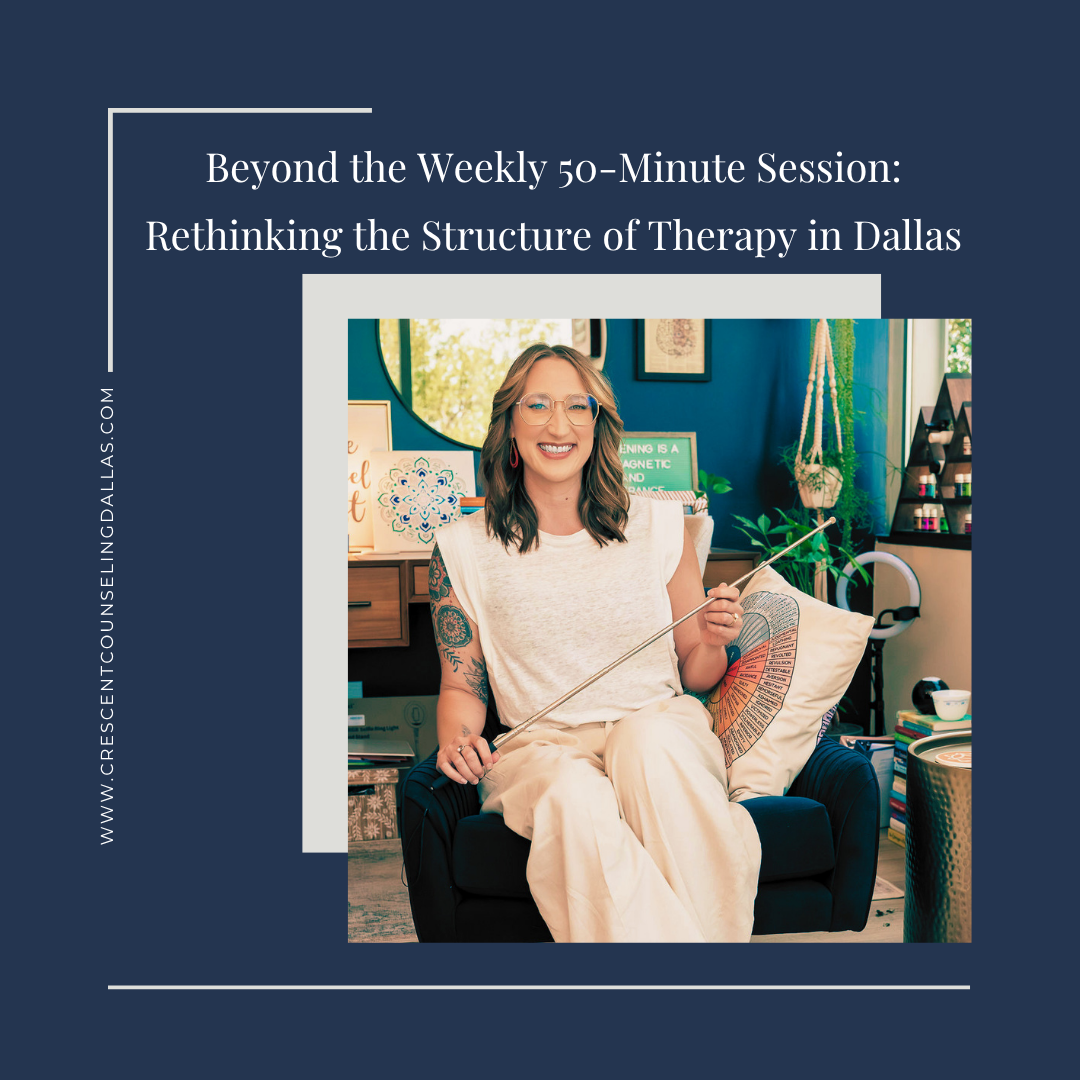
My name is Amanda.
I've spent my career in Dallas trying to understand why insight alone so often isn't enough and what it takes to actually reach where trauma lives. I'd love to talk about whether this work might be right for you.
Amanda Stretcher Lewis, MA, LPC-S
Brainspotting Certified | Brainspotting Consultant-in-Training | Safe and Sound Protocol Certified | Rest and Restore Protocol Certified | ISSTD Certificate in Complex Trauma & Dissociation | Level 1 & 2 Sensorimotor Psychotherapy | Practicing in Dallas since 2013

I specialize in working with adults navigating complex and developmental trauma, what I sometimes call wounds or injuries, because those words feel truer to what they are. Especially those living with CPTSD, attachment injuries, and the kind of patterns that formed early and have been running ever since.
I came to this work with intentionality. It mattered to me that the trainings I pursued felt genuinely aligned, not just evidence-based on paper, but consistent with what I actually believe about healing. That's how I found Brainspotting, Sensorimotor Psychotherapy, and the Safe and Sound Protocol. Each one arrived through its own path. All three turned out to be pointing at the same thing.
With Brainspotting, what drew me in was the flexibility and the trust it places in clients. There's no protocol to follow. A session can begin from something as specific as a single moment in a memory, or something as ambiguous as a vague felt sense you can't quite name. The assumption built into the model is that you’re capable of being with whatever you bring. My job isn't to manage that for you. It's to follow your process and trust it to reveal what it needs.
I came to Sensorimotor Psychotherapy through a similar felt sense of alignment. The modalities I bring into the room are ones I've felt something about, not just studied. What I love about Sensorimotor Psychotherapy is the same thing I love about Brainspotting, the curious, experimental attitude. There's no right or wrong in a session. There's whatever happens, and we use that as data to inform whatever comes next. Resources we discover together tend to be infinitely more useful than anything I could hand you.
The Safe and Sound Protocol fits into this picture more naturally than people expect, given that the word "protocol" is right there in the name. SSP uses specially filtered music to help the nervous system find safety and stay with it. Each person's path through the five hours of music looks completely different. Even here, even inside something called a protocol, I'm following you. The structure creates the container. You lead the way through it.
All three approaches share the same underlying values: assume capacity, not fragility. Trust the process to reveal itself. Stay curious about what your particular nervous system needs rather than prescribing what it should do. Recognize that both activation and expansion are part of healing… clearing what's painful is only half of it. The other half is helping the nervous system discover what becomes possible when the weight lifts.
In practice, all of this means I trust silence. I follow rather than lead. I stay present with what's happening in real time, in your body, in the room, in what moves between us, and I let your process show me what it needs. You’ll learn that my favorite word is curiosity. I love being curious together, experimenting, noticing, staying with something a little longer to see what it wants to show us.
I almost always get shocked by my door handle when I open it for clients to head back after a session. I genuinely believe this reflects something real about what happens in the room. There's energy there. There's movement. That's the part of this work I find most alive.
My Approach to Trauma Therapy in Dallas
The primary modalities I use are Brainspotting, Sensorimotor Psychotherapy, and the Safe and Sound Protocol. These approaches are informed by a broader set of frameworks I draw on continuously: Interpersonal Neurobiology, which helps me understand how the brain and relational experience shape each other; Polyvagal Theory, which gives language to the nervous system states underlying trauma responses; and Ego State Therapy, which supports the parts work that often becomes central in complex and developmental trauma.
If you’re interested in a more intensive format, I also offer Brainspotting Personal Intensives, extended sessions that give the work enough time and space to go somewhere meaningful and come back changed. And for couples where trauma is part of the relational picture, Integrated Trauma-Informed Couples Therapy allows Allison and me to work together in a way that addresses both the relationship and your individual nervous system simultaneously.
Understanding Trauma and the Nervous System
“Any experience of fear and/or pain that doesn’t have the support it needs to be digested and integrated into the flow of our developing brains.”
— Bonnie Badenoch in The Heart Of Trauma
This definition has stayed with me since I first encountered it, and I return to it often. What I love about it is what it doesn't say. It doesn't say something went terribly wrong. It doesn't say you're broken or damaged. It says something happened, and the support wasn't there for it to move through. That's a different starting place entirely.
It also points to something important about the nervous system: digestion and integration are biological processes, not moral ones. Your system wasn't weak. It was doing exactly what developing brains do when fear or pain arrives without enough support… it held on. Held it somewhere. And now we're here, together, to help it finally move.
Trauma isn’t always defined only by a single event. It can result from overwhelming experiences, chronic stress, attachment injuries, medical events, relational betrayal, or developmental experiences where safety felt inconsistent, sometimes across generations. If you’re seeking a trauma counselor in Dallas, you might be navigating symptoms long after the original event has passed, and you may not even have a clear sense of what the original event even was.
Whatever you're experiencing is valid and deserves to be worked with. You don't need a diagnosis, a dramatic story, or a single defining moment. If something is getting in the way of feeling safe, connected, and alive in your life, that's enough.
And working with this kind of history doesn't mean attacking anyone. It doesn't mean blaming parents or caregivers. The people who shaped us were shaped by someone, too. I find it meaningful to look not only at what was passed down that needs healing, but also at what came through the lineage worth honoring, the generational gifts, the strengths, the resilience that got your family this far. Both can be true at the same time.

Ready to explore trauma therapy in Dallas?
If what you've read here resonates, if you recognize yourself in the description of someone who has insight but is still getting hijacked, who wants connection but finds it hard to land there, who is ready to try something that works at the level where this actually lives, I'd love to talk.
The consultation call is free, fifteen minutes, and low-pressure. I'll spend that time starting to learn about you and sharing honestly about how I work, so we can both get a sense of whether this feels like the right fit. There's no obligation and no script, just a conversation.
If you have questions before you're ready to schedule, about my approach, about what trauma therapy in Dallas actually looks like, or about whether what you're experiencing is something I work with, those are welcome too. You can reach me through the contact page or call directly at (214) 216-1495.
Have questions about trauma therapy in Dallas? That’s normal! Learn about me, or check out our FAQs about therapy.



PTSD Therapist Dallas
Post-traumatic stress has a way of making the past feel like the present. Intrusive memories, hypervigilance, emotional reactivity, avoidance, and shutdown are signs that your nervous system is still doing a job it learned to do under very different circumstances. It hasn't gotten the message yet that things have changed.
PTSD therapy in Dallas with me focuses on helping your nervous system complete what it started, the interrupted stress responses that got frozen in place when the original experience was too overwhelming to fully process. This isn't about reliving what happened. It's about helping your body finally move through what it's been holding.
What I find most meaningful about working with PTSD is the same thing I find meaningful about all trauma work: the assumption that your responses make sense. The startle response, the shutdown, the way certain sounds or smells or moments of intimacy can pull you somewhere you don't want to go are the nervous system doing exactly what it was trained to do. Our work together is about helping it learn something new, at a pace that feels safe and manageable, through a relationship that itself becomes part of what makes new learning possible.
I work with both single-incident PTSD and complex PTSD. And if you're not sure which category you fit, that's okay.
How Trauma Lives in the Body
Trauma is not only remembered cognitively, it's stored in the body itself. Your nervous system may have remained mobilized in fight or flight, or collapsed into freeze or shutdown, long after the original experience passed. It learned to stay there. And like any procedural learning, it doesn't update through insight alone. It updates through new experience, repeated over time, in a relationship that feels safe enough to let something shift.
Trauma therapy in Dallas that includes somatic and nervous system work can help your body metabolize what it's been holding and build new experiences of safety, not just as a concept you understand, but as something your nervous system actually knows.
Who Trauma Therapy Is For
Trauma therapy in Dallas with me tends to be a good fit for adults who:
Have done therapy before and have real insight — and are still getting hijacked by fight, flight, or freeze in moments they wish they weren't
Want connection and closeness but find something in them also pulls back from it — safety is hard to land in and even harder to stay
Carry a loud inner critic and are genuinely ready for more self-compassion
Feel burnt out in a way that's hard to explain — tired not just from doing too much but from the effort of being a certain way for a long time
Are longing to reconnect to something — aliveness, creativity, joy, a version of themselves that doesn't feel so managed and defended
Are navigating PTSD, CPTSD, attachment injuries, or developmental wounds — including the kind without a clear single event
Have tried insight-oriented approaches and found that understanding the pattern hasn't been enough to shift it
You don't have to check every box. And you don't have to be certain this is right before you reach out. Tentative readiness counts.
If something here resonates, that's worth paying attention to. A lot of the people I work with describe a moment of recognition when they found their way to this page. Not certainty. Just a sense of: maybe this is the thing I've been looking for.
Whenever you're ready.
FAQs
-
Being a trauma therapist in Dallas means I’ve dedicated my practice to understanding and treating the impacts of trauma in a deep, holistic way. I’ve intentionally focused my continuing education on trauma-informed approaches, ensuring I can offer effective tools and techniques to help clients on their healing journey.
Some of the training and certifications I’ve completed include:
Certified in Brainspotting, a powerful brain-body-based modality for processing trauma. I am currently enrolled in a Consultant-in-Training program for Brainspotting.
Completed Level 1 Sensorimotor Psychotherapy for Trauma Themes and Level 2 Sensorimotor Therapy for Developmental and Relational Injury, with plans to continue advancing in this transformative somatic approach.
Certified in the Safe and Sound Protocol (SSP) and in the Rest and Restore Protocol (RRP), an evidence-based listening therapy for nervous system regulation.
Active member of the International Society for the Study of Trauma and Dissociation (ISSTD), holding an ISSTD Certificate in Complex Trauma and Dissociation and currently pursuing an Advanced Certificate in Complex Trauma and Dissociation.
Completed Healing Trauma: IPNB Clinical Strategies for Applying the 9 Domains of Integration toward Deep Therapeutic Growth through Dan Siegel's Mindsight Institute.
I also regularly engage in individual consultation with other professionals in these fields, collaborate with colleagues to practice and refine skills, and stay up to date with the latest research and techniques.
Many of these modalities are best learned by experiencing them myself, so I’ve taken the time to explore and embody these approaches in my own work. This commitment allows me to not only better understand what my clients might experience but also create a safe, informed, and compassionate space for healing.
-
What is trauma-focused therapy?
Trauma-focused therapy is a collaborative process designed to help you heal from the effects of trauma in a way that feels safe, supportive, and empowering. In my approach, I follow a three-phase roadmap for change:
Establishing Safety and Stability
The first step in trauma therapy is helping you feel grounded and secure. This includes creating a safe space for our work together and developing tools to regulate your nervous system. We'll focus on building resources to support you through the process, so you feel empowered and in control.Processing Trauma
When you're ready, we’ll begin exploring the effects of trauma at a pace that feels manageable. My focus is not solely on the details of your story but on how trauma has impacted your body, mind, and emotions. Somatic work is a key part of this process, helping us work with what’s happening in your body and nervous system to release what’s been stuck or overwhelming.Integration and Growth
The final phase focuses on creating lasting change by integrating the progress we've made. This involves fostering resilience, strengthening your sense of self, and supporting you as you move forward with greater ease and confidence in your life and relationships.
Trauma-focused therapy emphasizes process over content, meaning you don’t have to relive every detail of your story for healing to happen. While hearing and holding your story is important to me, my approach centers on helping you listen to what your body and emotions are telling you, gently working with what arises, and moving toward a sense of wholeness.
This type of therapy isn’t about rushing—it’s about honoring where you are and helping you reconnect with a deeper sense of safety, strength, and self-compassion.
-
Trauma therapy can feel challenging because it asks us to confront parts of ourselves that have been overwhelmed, shut down, or even hidden away for a long time. Trauma affects not just our thoughts but also our bodies, emotions, and sense of safety. When we start to untangle those threads, it’s normal to feel a mix of vulnerability, discomfort, and even resistance.
It’s hard because trauma doesn’t just live in our memories—it’s stored in the body and nervous system. That’s why things like certain sounds, smells, or even feelings can trigger a response that doesn’t seem to match the present situation. In therapy, we work to gently explore these responses, which can stir up emotions or sensations you’ve been avoiding to protect yourself. That’s tough work! But it’s also where healing happens.
Another reason trauma therapy feels hard is that it requires patience and self-compassion. Trauma is a slow process to unwind because it’s deeply woven into how we think, feel, and interact with the world. It can feel frustrating to take small steps instead of diving straight into the “fix.” But those small steps build the foundation for real, lasting change.
What makes trauma therapy possible—and worth it—is that you’re not doing it alone. My role is to guide and support you through the process, ensuring that we move at a pace that feels safe and manageable for you. Along the way, we’ll celebrate every bit of progress and build the resources you need to feel resilient and empowered, even when the work feels hard.
Healing from trauma takes courage, but that courage grows as you start to feel the benefits: greater connection to yourself and others, more capacity to regulate your emotions, and a deeper sense of peace. And while it’s hard, it’s also one of the most rewarding journeys you can take.
-
Trauma therapy offers more than just relief from painful memories—it helps you build a life that feels safe, connected, and fulfilling. When trauma impacts your nervous system, emotions, and relationships, it can leave you feeling stuck, overwhelmed, or disconnected from yourself and others. Trauma therapy provides a space to process these experiences while equipping you with tools to regain a sense of control, resilience, and self-compassion.
In trauma therapy, you'll learn how to calm your nervous system and recognize the patterns your body and mind have developed to cope with the trauma. These patterns might look like fight-or-flight responses, shutting down emotionally, or feeling stuck in intrusive memories. Through somatic work, mindfulness, and relational exploration, we gently help your body and mind reconnect, creating space for healing and growth.
The benefits of trauma therapy include:
Improved emotional regulation: Learn to manage overwhelming emotions like anxiety, anger, or sadness without feeling consumed by them.
Deeper self-awareness: Build a stronger connection with your body and emotions, allowing you to understand your triggers and patterns with curiosity instead of judgment.
Healthier relationships: Develop the capacity to set boundaries, communicate effectively, and connect with others in a way that feels authentic and safe.
A greater sense of safety and control: Feel more grounded and present in your daily life, even in situations that used to feel overwhelming or triggering.
Trauma therapy isn’t about erasing your past—it’s about integrating those experiences in a way that allows you to move forward with confidence and wholeness. Whether you're struggling with complex trauma, PTSD, or the lasting effects of a challenging experience, therapy can be a powerful step toward reclaiming your life.
If you're curious about how trauma therapy might help you, reach out through my Contact page to schedule a consultation. Together, we’ll explore how I can support you in your healing journey.
-
The length of trauma therapy varies depending on your history and goals. Some individuals experience meaningful shifts within several months, while others engage in longer-term work for developmental trauma or attachment injuries. Our focus is not on rushing healing but on building regulation and resilience at a pace your nervous system can tolerate.
-
Trauma therapy does not require reliving overwhelming experiences. My approach prioritizes nervous system stability and relational safety. Sessions are paced carefully to prevent retraumatization while still allowing meaningful processing.
-
Yes. I provide in-person trauma therapy in Dallas as well as virtual sessions across Texas. In-person work can be particularly supportive for somatic and regulation-focused approaches.
-
While EMDR therapy in Dallas is a well-known trauma treatment, we specialize in Brainspotting and Sensorimotor Psychotherapy. These approaches similarly work at a brain-body level, with an emphasis on attunement and nervous system regulation.
-
The best type of therapy for trauma depends on your unique experiences, nervous system responses, and goals. Many people benefit from trauma-informed approaches that go beyond traditional talk therapy, such as Brainspotting, Sensorimotor Psychotherapy, and other nervous system-focused therapies. At Crescent Counseling, we help adults and couples in Dallas process trauma through relational, body-aware, and trauma-informed therapy tailored to each person’s needs.scription